The Path from Product to Household Name
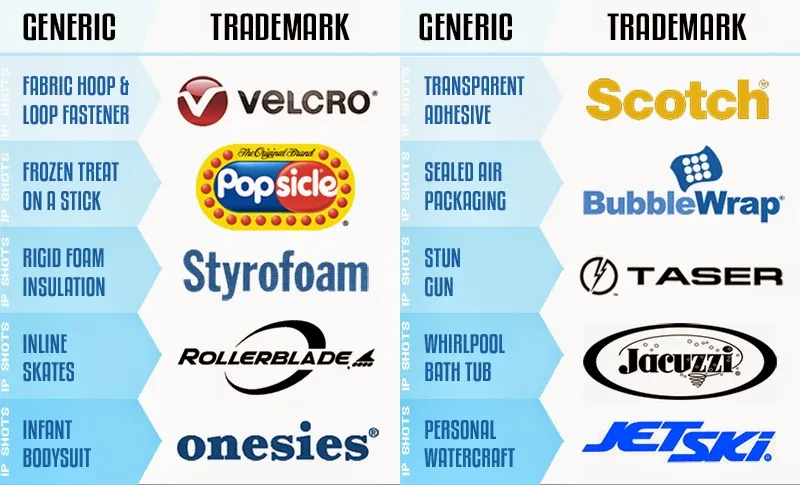
Photo Credit: This Bug’s Life
You know your brand has reached legendary status when it becomes synonymous with an entire category. Think Clorox, Q-tips, or Xerox—names so deeply embedded in our vocabulary that they’ve transcended the products themselves. These are examples of proprietary eponyms: brand names that have become the generic term for a product or service due to their popularity and success. Essentially, when people ask for a “Kleenex,” a “Band-Aid,” or a “Xerox,” they’re using a trademarked brand name as if it were the common noun for the category.
And when your brand name evolves into a verb? That’s another level entirely. “I’ll Google it.” “She Venmoed me.” “Let’s Zoom later.” At that point, your brand isn’t just in the market—it defines the market.
But how does a company get there? How do you move from being one of many to being the one that represents the entire category?
After years of watching, building, and advising brands, I’ve noticed a few consistent traits and strategies that help brands reach that rarefied air.
1. What’s in a Name? More Than You Think
A name is the first—and often most enduring—touchpoint of your brand. It sets expectations, evokes emotion, and establishes identity. There’s no single formula for the “right” kind of name, but the strategy behind it matters.
Some brands choose descriptive names that signal a clear purpose:
Safeway implies safety, reliability, and trust.
PayPal conveys partnership and payment ease.
Others lean into founder names—a timeless choice that builds legacy and credibility:
Wells Fargo and Ford are steeped in heritage.
And then there are invented names—distinctive, abstract, and designed to stand out in a crowded market:
Uber means “superior” or “above,” encapsulating its ambition.
Kodak was a made-up word—short, sharp, and globally memorable.
Each naming route has its rewards and risks. Descriptive names are intuitive but harder to trademark. Invented names are unique but require more marketing investment to build meaning. What matters most is alignment: your name must reflect your brand’s intent, tone, and promise.

Photo Credit: Live and Let’s Fly
2. Market Saturation: Be the Category or Redefine It
To become the default, you must either dominate an existing space or create a new one.
Clorox didn’t invent bleach—but it outperformed and out-marketed competitors so consistently that its name became shorthand for the product.
Uber didn’t invent ride-sharing—it reframed what convenience, immediacy, and experience looked like in transportation.
Market saturation isn’t about being everywhere—it’s about being unmissable. Your product must consistently show up where your audience lives, works, and talks. Every interaction reinforces the association between your name and the solution they need.
3. Quality + Reputation: The Long Game of Trust
You can’t brand your way into dominance without earning it.
When people ask for a Q-tip, they’re not thinking about cotton swabs generically—they’re thinking about reliability, softness, and quality. Brand recognition without substance fades fast.
Longevity comes from delivering consistently on the brand promise. That means product performance, customer experience, and reputation must all work in harmony. You can’t just tell people you’re the best—you have to prove it again and again.
4. Embed Yourself in Culture
Becoming a verb doesn’t happen through marketing alone—it happens when your brand becomes part of everyday life.
Google achieved this not only through innovation but by aligning with a universal human behavior: curiosity. Searching became synonymous with the brand because it connected to something we all do, every day.
Zoom didn’t just market video meetings during the pandemic; it defined connection in a socially distant world.
Cultural embedding happens when your brand isn’t just a product—it’s a behavior, an experience, a shorthand for getting something done.
Photo Credit: Wikimedia Commons
5. Never Stop Innovating
Ironically, the moment a brand becomes the default, it risks becoming too generic. Xerox, for instance, had to legally defend its name from being fully genericized.
The best brands stay dominant not by resting on their laurels but by constantly evolving—refreshing their relevance, innovating their offerings, and reminding the market why they led in the first place.
Google didn’t stop at search. It expanded into maps, cloud services, and AI—all while maintaining the same sense of utility and discovery that made it indispensable.
Innovation keeps a brand alive in culture and in competition. Without it, even the most iconic name can fade into history.
The Takeaway
When your brand name becomes the default, you’ve achieved something rare: your identity and the product’s utility have merged. It’s the holy grail of marketing—a mix of smart strategy, cultural relevance, and unwavering quality.
It doesn’t happen overnight. But with the right name, relentless consistency, and an obsession with staying relevant, you can transform your brand from just another option into the option.